Sea chest repair and coating, without drying the chest.
Aqua Guard adheres to dry, wet and submerged surfaces. Clean the chest with fresh water, rebuild the eroded areas and coat it while it is still wet: done by the crew on board, with no hot work.
Prefer to talk? Call (+45) 6916 2400 or email tech@sepcotech.com
Ordering through ShipServ? Find us under TNID 317548
- Aqua Guard adheres to dry, wet and submerged surfaces
- Super Metal Filler rebuilds eroded and pitted areas
- Two coats, wet on wet, by brush or roller
- ABS Product Design Assessment certificate on all products
Updated 24 November 2026 · SepcoTech A/S, Roskilde, Denmark
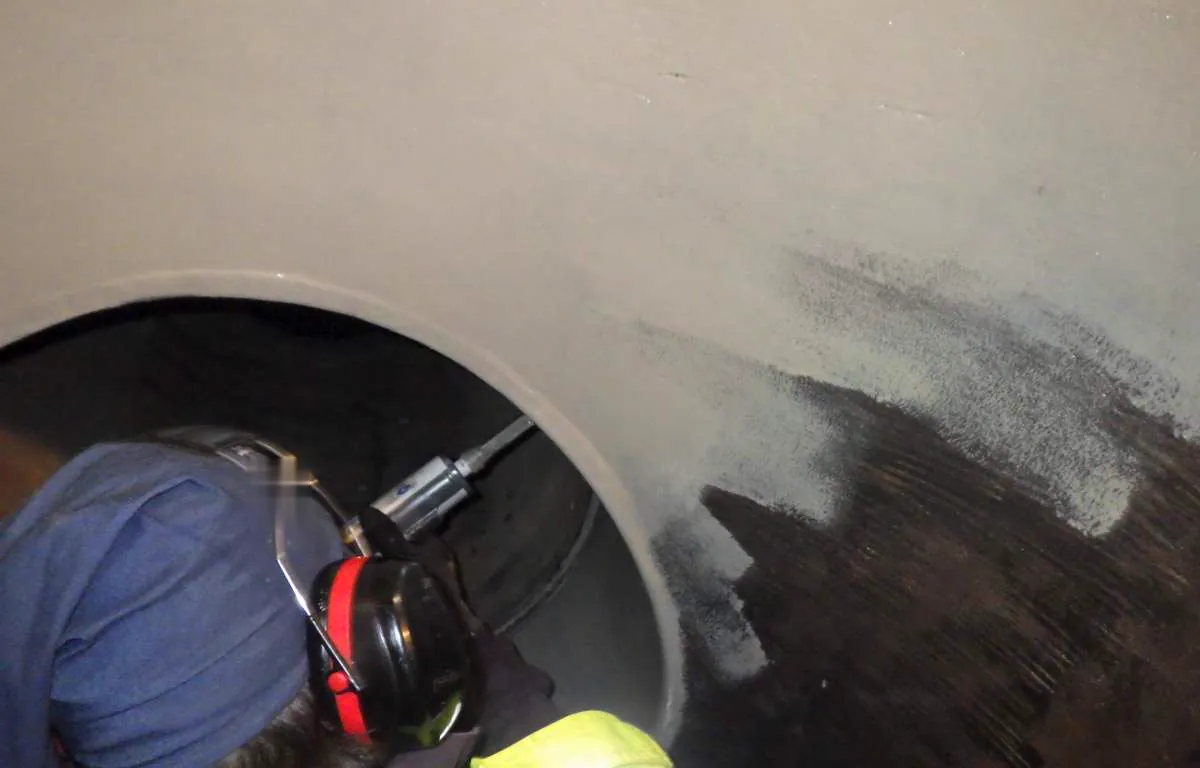 Before
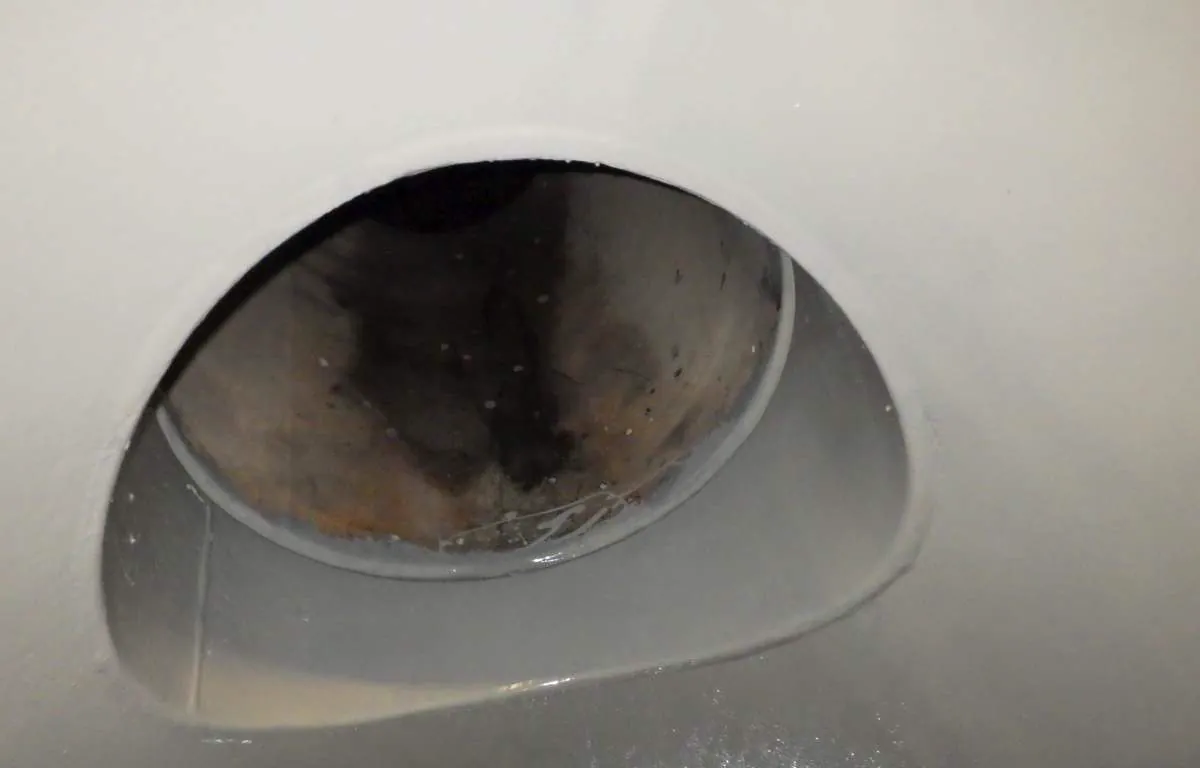 After
- Surface
- Wet or dry
- Cleaning
- High-pressure fresh water
- Coating
- Aqua Guard, 2 coats
- Per coat
- 200–250 µm wet film
- Pitting
- Super Metal Filler
- Hot work
- None
Sea chests wear out from the inside.
Sea water, flow and mixed metals work on the chest wall, the dome and the strainer seat all the time the ship is in service.
A sea chest is exposed to erosion, corrosion and bimetallic corrosion, and to marine fouling that holds moisture against the steel. Left alone, the wall pits and thins, and the strainer seat and flanges lose their shape.
A conventional coating needs a dry surface, which means draining the chest and waiting for it to dry before anything can go on.
Aqua Guard is made for surfaces that cannot be dried out. It is a high-build, 100 % solids epoxy that adheres to dry, wet and submerged surfaces, so the chest is coated straight after cleaning.
Deep pitting and eroded areas are rebuilt first with Super Metal Filler. The same method covers sea water strainers and sea water filters.
How to repair and coat a sea chest.
From the SepcoTech sea chest and sea water filter procedure. The surface does not need to be dry to apply the product.
Isolate and clean
Isolate the chest and, if possible, dismantle the sea water filter. Remove all salt, grease, oil and marine fouling with high-pressure fresh water and a suitable degreaser if required.
Prepare the surface
Surface preparation according to the SepcoTech surface preparation guide. Where rust or old coating is still left after the water, the Rotating Blaster Duo takes those spots back to bright steel on an ordinary drill.
Rebuild worn areas
Rebuild deteriorated areas to their original dimensions with Super Metal Filler. Allow semi-curing.
Coat 1
Apply the first layer of Aqua Guard with a brush or roller, 200–250 µm wet film thickness. Allow semi-curing: the coat should stay wet or tacky.
Coat 2, wet on wet
Apply the second layer of Aqua Guard while the first is still tacky, again 200–250 µm wet film thickness, and carry it through the welds and edges.
Cure and back in service
Allow final curing before the chest goes back into service. The result protects the chest and filter against corrosion, erosion and marine fouling.
Terms used on this page
- Sea chest
- The recess in the hull below the waterline where sea water is taken in for cooling and ballast.
- Bimetallic corrosion
- Corrosion that happens where two different metals meet in sea water.
- Wet film thickness
- The thickness of a coat as it is applied, measured before it cures.
- Wet on wet
- The next coat goes on while the one before is still tacky, so the two bond into one.
- Semi-curing
- The coat has started to set but is still tacky to the touch.
- µm
- Micrometre, a thousandth of a millimetre.
The procedure as a PDF
The sea chest and sea water filter procedure, ready to print for the job or forward to the technical superintendent.
What goes into the repair.
 Coating, wet or dry
Aqua Guard Coating
High-build epoxy that adheres to dry, wet and submerged surfaces. Brush, roller or spray.
265 mlGrey #10238Black #10302Product page Brochure PDF

Where the chest can be dried, Super Guard can be used for the coats instead, as in the sea chest protection procedure.
A sea chest coated without drying it first.
Fouling off, fresh water clean and straight on with Aqua Guard. Two coats wet on wet, and the chest was back in service three days later.
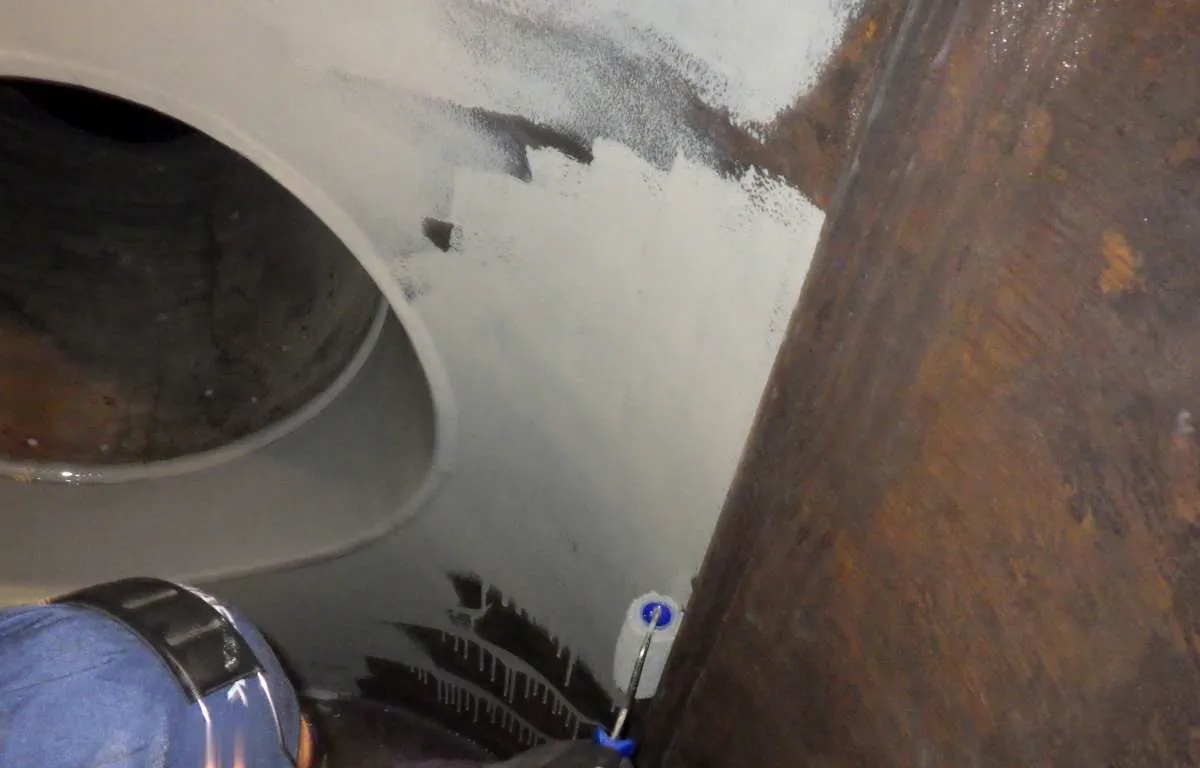 Before
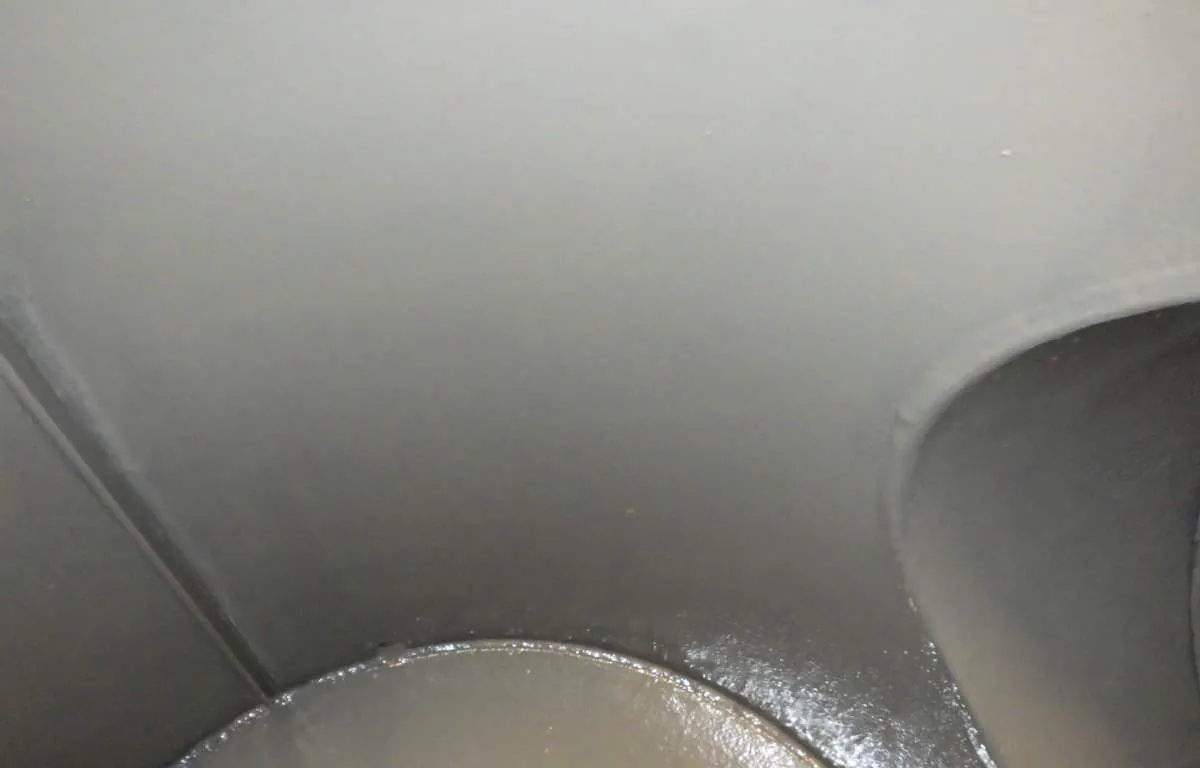 AfterCase · Sea chest
Sea chest coating without drying
The wall, the dome, the inlet and the filter flange, coated and reassembled.
See the case ProcedureSea chest repair and corrosion protection
Life extension of a sea chest exposed to erosion, corrosion and bimetallic corrosion.
Open the procedure ProcedureSea chest and sea water filter coating
Protect the chest and the filter against corrosion, erosion and fouling with Aqua Guard on wet surfaces.
Open the procedure ProcedureSea water strainer protection
The same products and method for the sea water strainers.
Open the procedureSea chest repair: your questions.
Can a sea chest be coated without drying it?
Yes. Aqua Guard Coating adheres to dry, wet and submerged surfaces, so the chest is cleaned with high-pressure fresh water and coated straight away. In a SepcoTech case, the chest was coated without drying and was back in service three days later.
Can a sea chest be coated underwater?
Aqua Guard adheres to dry, wet and submerged surfaces. Whether the work can be done with the chest flooded depends on access and the job. Send us the details and we will specify the method.
How is the sea chest prepared before coating?
Isolate the chest, dismantle the sea water filter if possible, and remove salt, grease, oil and marine fouling with high-pressure fresh water and a degreaser if needed. Then prepare the surface according to the SepcoTech surface preparation guide.
How many coats of Aqua Guard does a sea chest need?
Two coats, applied wet on wet by brush or roller, each with a wet film thickness of 200 to 250 µm according to the SepcoTech procedure.
What about deep pitting and eroded areas?
Rebuild them to their original dimensions with Super Metal Filler Compound and let it semi-cure before the first coat of Aqua Guard.
Can the crew do the repair?
Yes. The sea chest procedures are written for the crew on board, during voyage, with no hot work.
Which products are needed?
Aqua Guard Coating (Grey #10238 or Black #10302) for the coats, Super Metal Filler Compound (#10240) for pitting, and Bio Cleaner (#10254) for degreasing.
Describe the damage.
We'll specify the repair.
Tell us the dimensions, whether the surface is wet or dry, and the operating temperature and pressure. We normally reply within one business day.
Request a quote or repair advice
No obligation. If another approach suits the damage better, we will say so.