A sea chest coated without drying it first.
Fouling off, fresh water clean, and straight on with Aqua Guard: the surface does not need to be dry. Four steps, and the chest was back in service three days later.
Prefer to talk? Call (+45) 6916 2400 or email tech@sepcotech.com
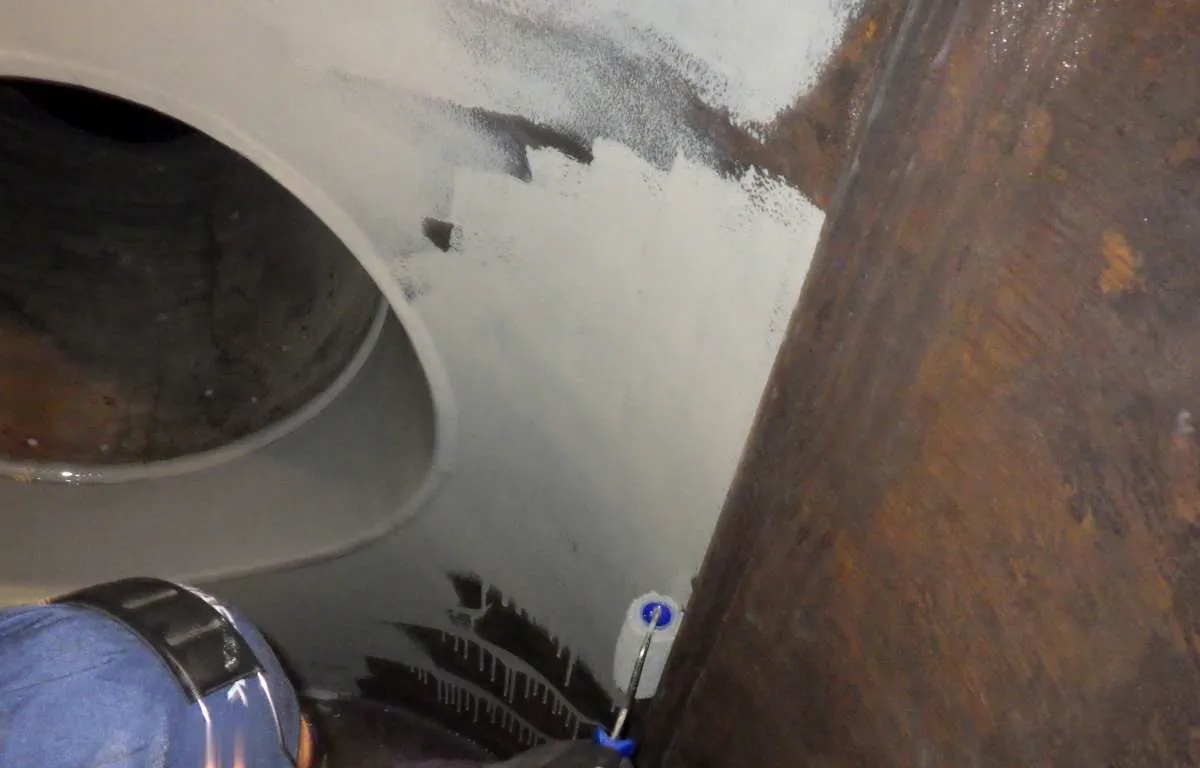 Before
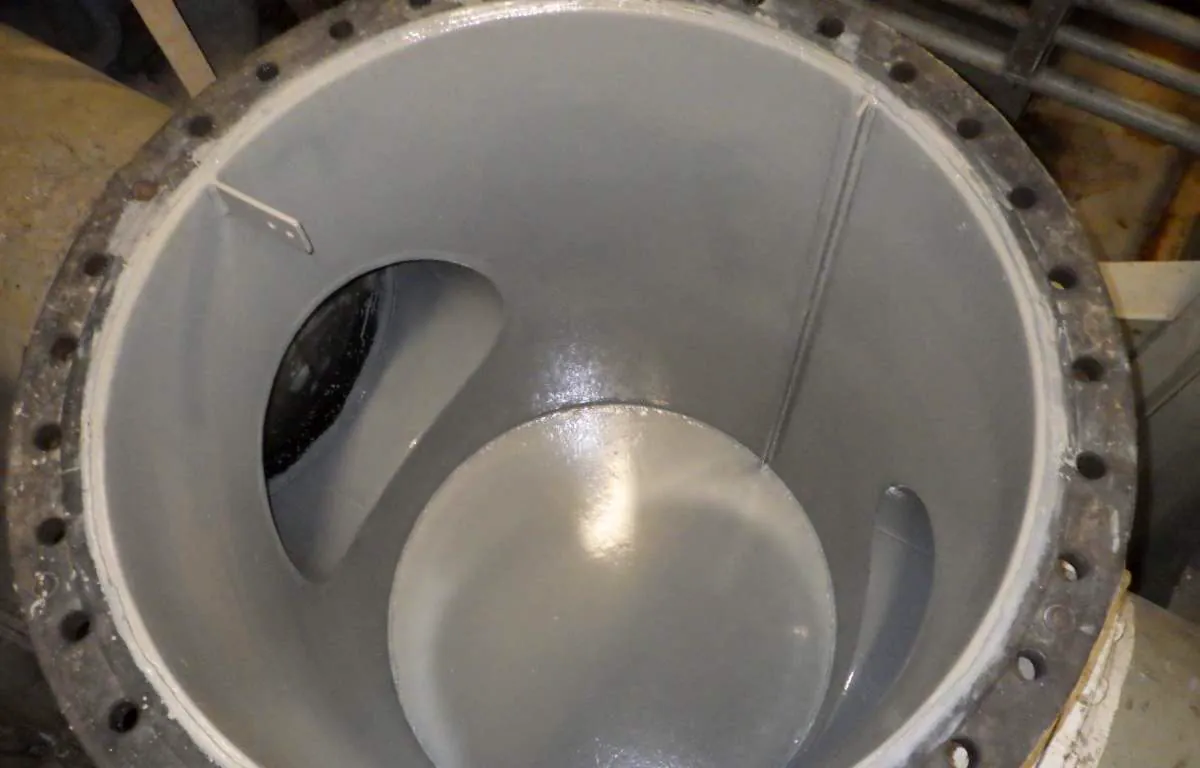 After
- Area
- Sea chest and filter
- Cleaning
- High-pressure fresh water
- Drying
- Not needed
- Build-up
- 2 coats, wet on wet
- Per coat
- 500 to 700 µm wet
- Back in service
- After 3 days
Step by step.
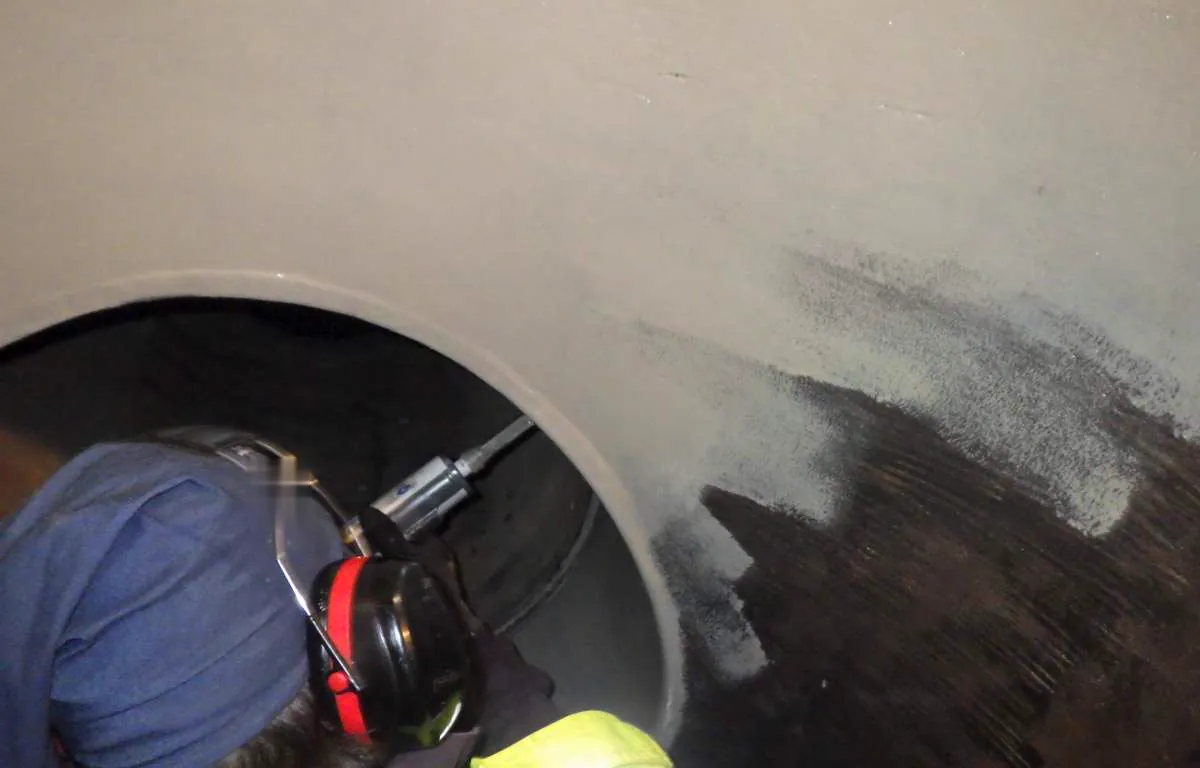
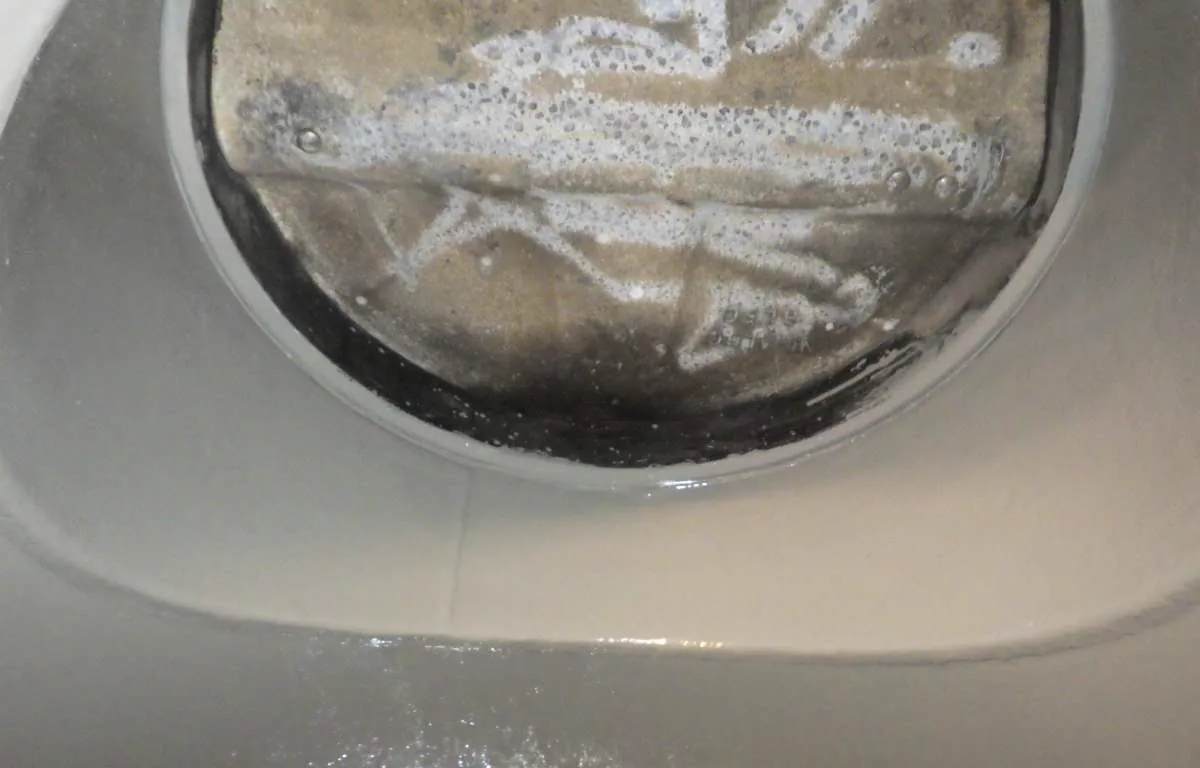
Isolate and clean
Isolate the chest, take off the marine fouling and clean with high-pressure fresh water, into the corners and around the inlet. Degrease where needed. No drying.
 Bio Cleaner #10254Tip for similar jobs
Where rust or old coating is still left after the water, the Rotating Blaster Duo takes those spots back to bright steel on an ordinary drill, before the first coat.
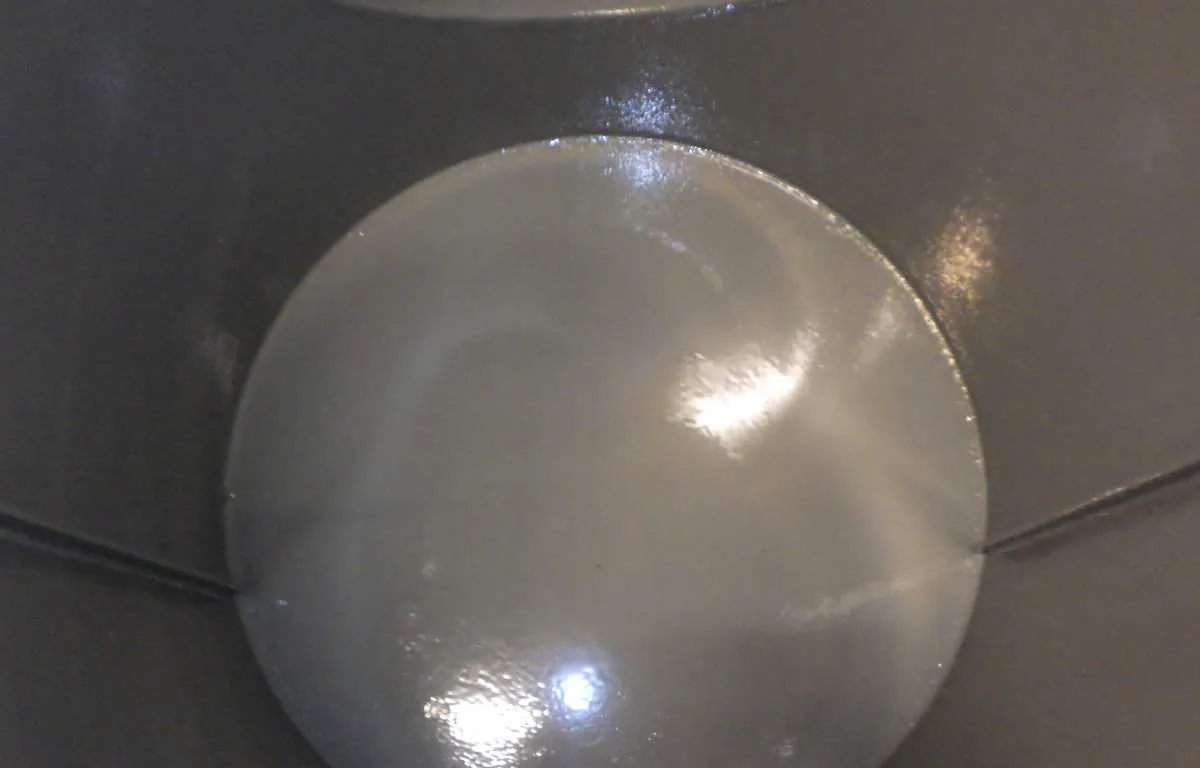
Coat 1 on the wet surface
Brush or roll Aqua Guard Coating evenly onto the wet surface, 500 to 700 µm wet, with full coverage over the wall and the dome.
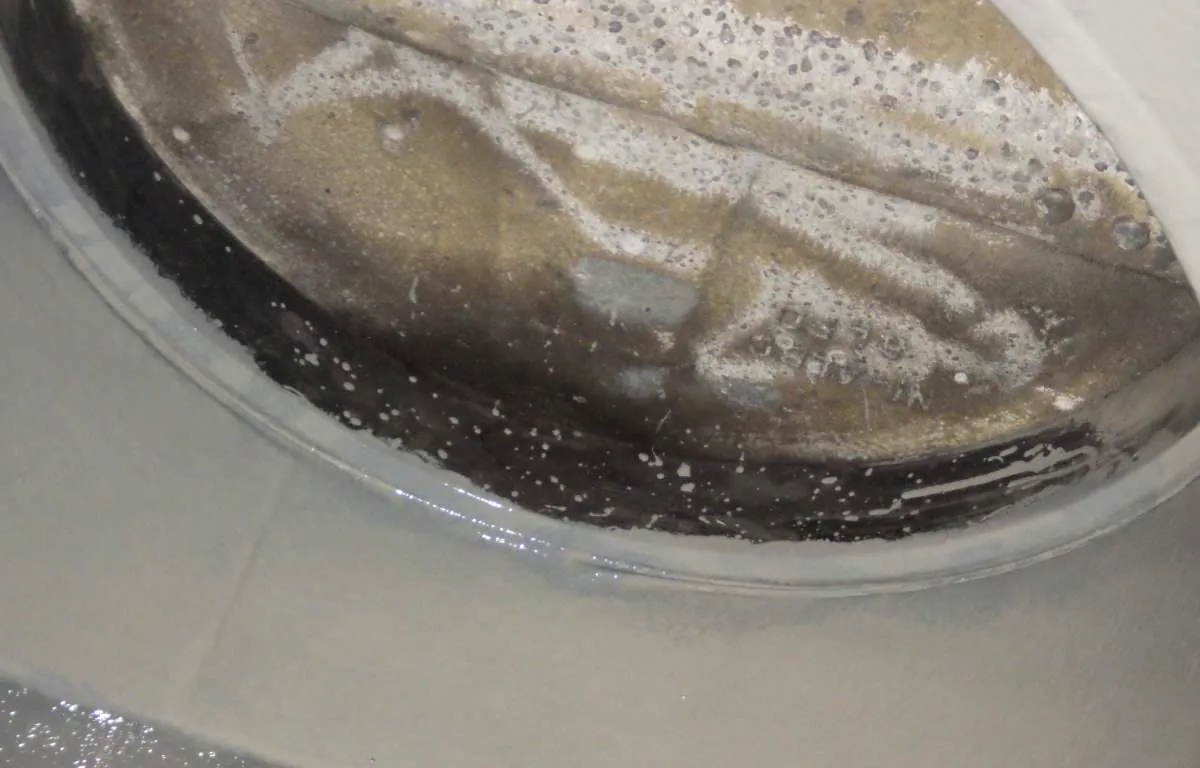
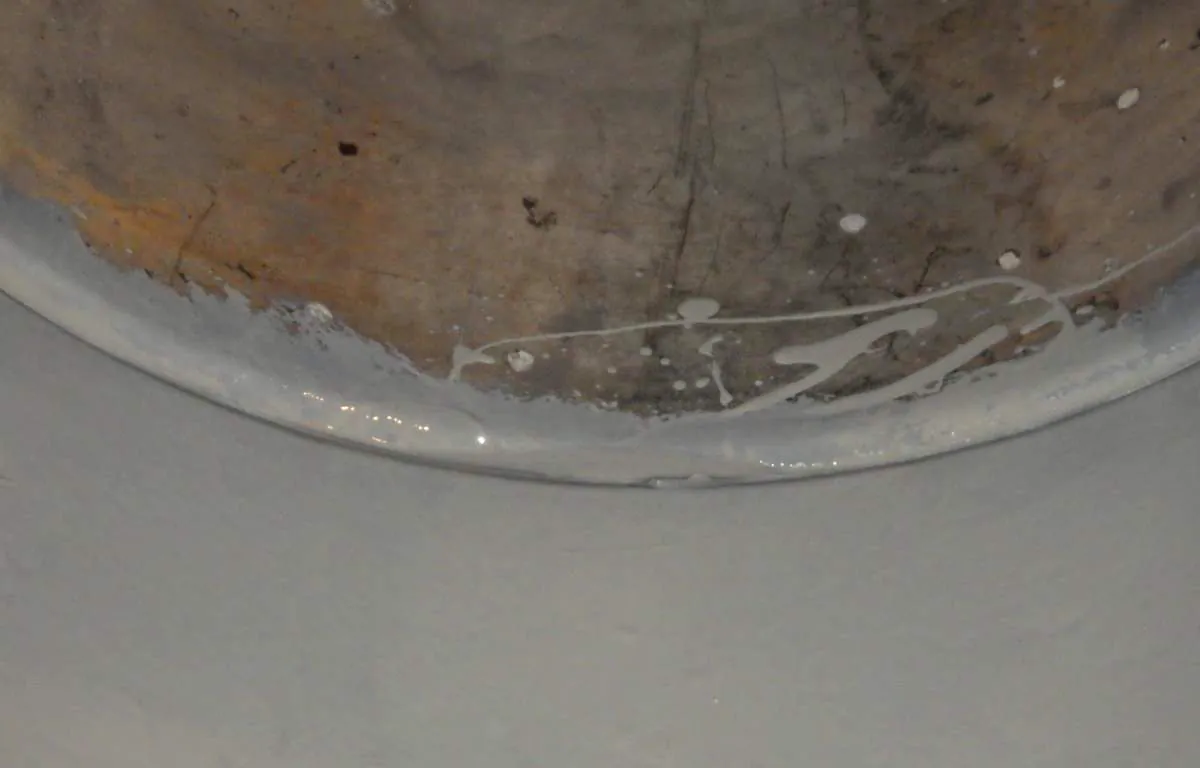
Coat 2, wet on wet
Apply the second coat while the first is still tacky, to the same thickness, and carry it through the welds and edges.
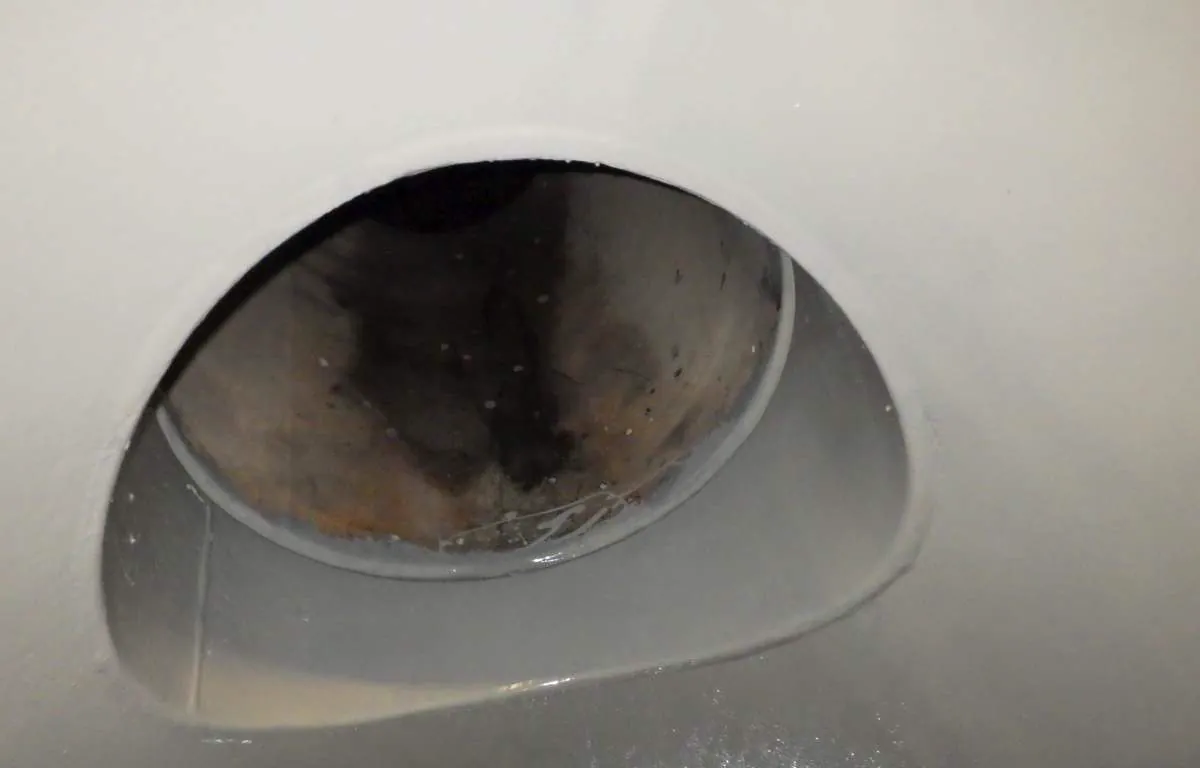
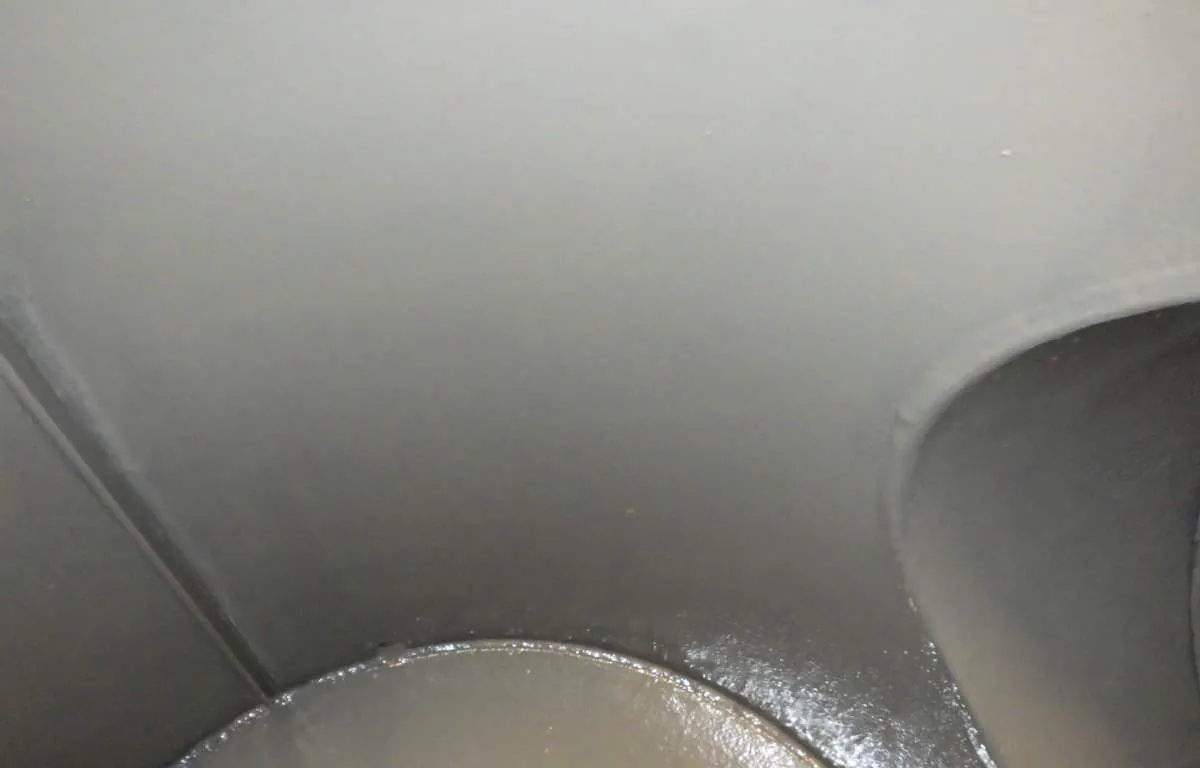
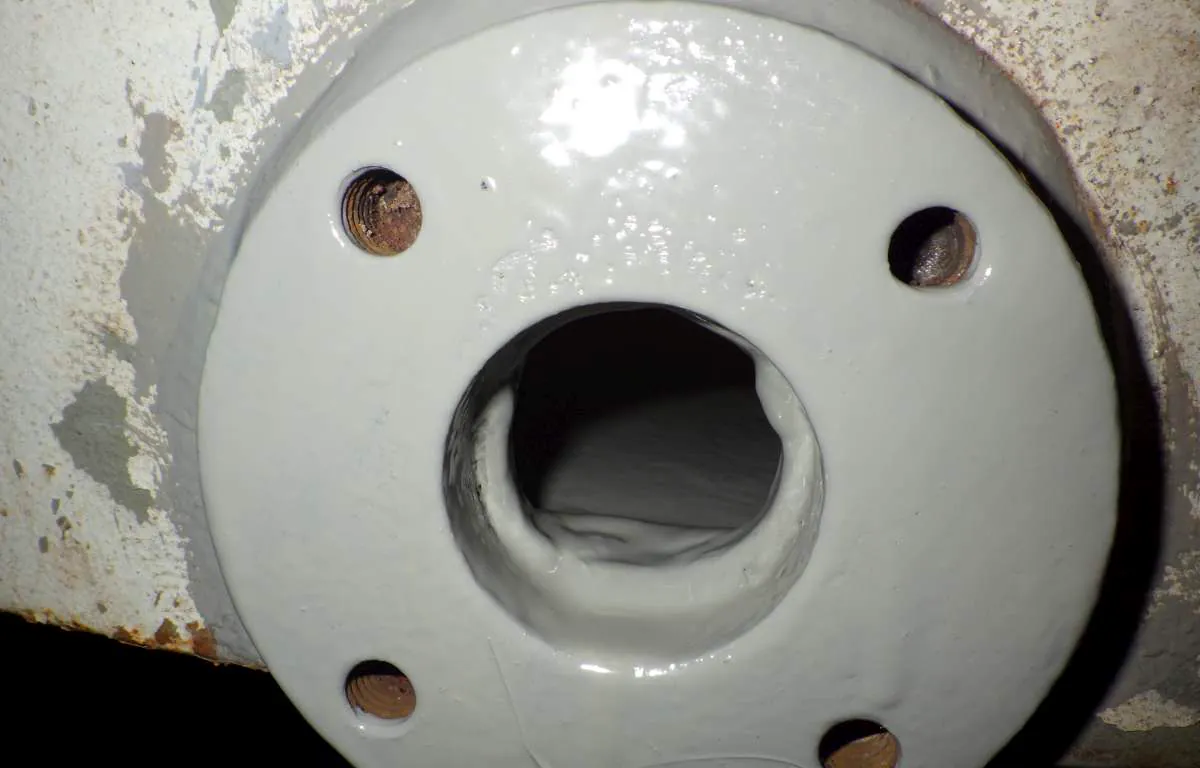
Back in service three days later
Coated throughout: the wall, the dome, the inlet and the filter flange, which was coated and reassembled.
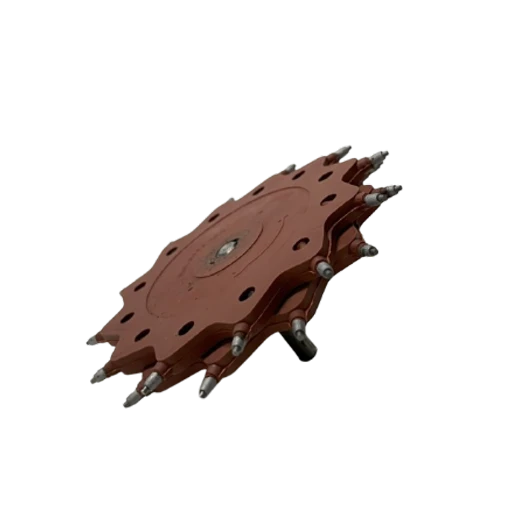 Rotating Blaster Duo #10267
What went into the repair.
 Coating
Aqua Guard Coating Grey
Bonds and cures on a wet surface, so the chest does not have to stand and dry first.
265 ml#10238Product page Brochure PDF
The full case report
This case as a four-page PDF, ready to print or forward to the technical superintendent.
More before and after.
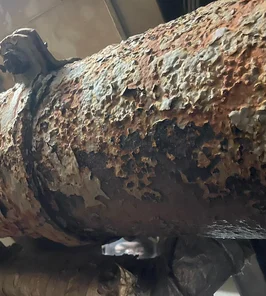 Before
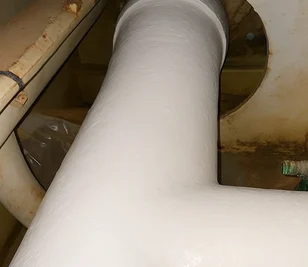 AfterContainer vessel
Leak repair: cargo pipes
Leaking, corroded pipes inside the ballast tanks, sealed in place by the crew.
See the repair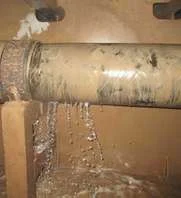 Before
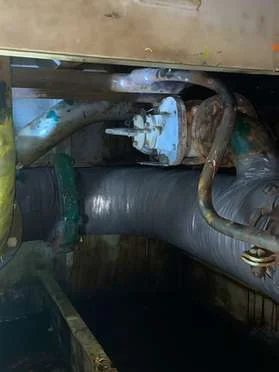 AfterSupertanker
Leak repair: GRE ballast pipes
Cracked GRE pipes and a displaced coupling, bonded and sealed inside the ballast tanks.
See the repair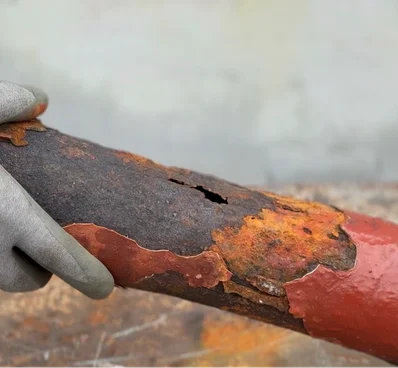 Before
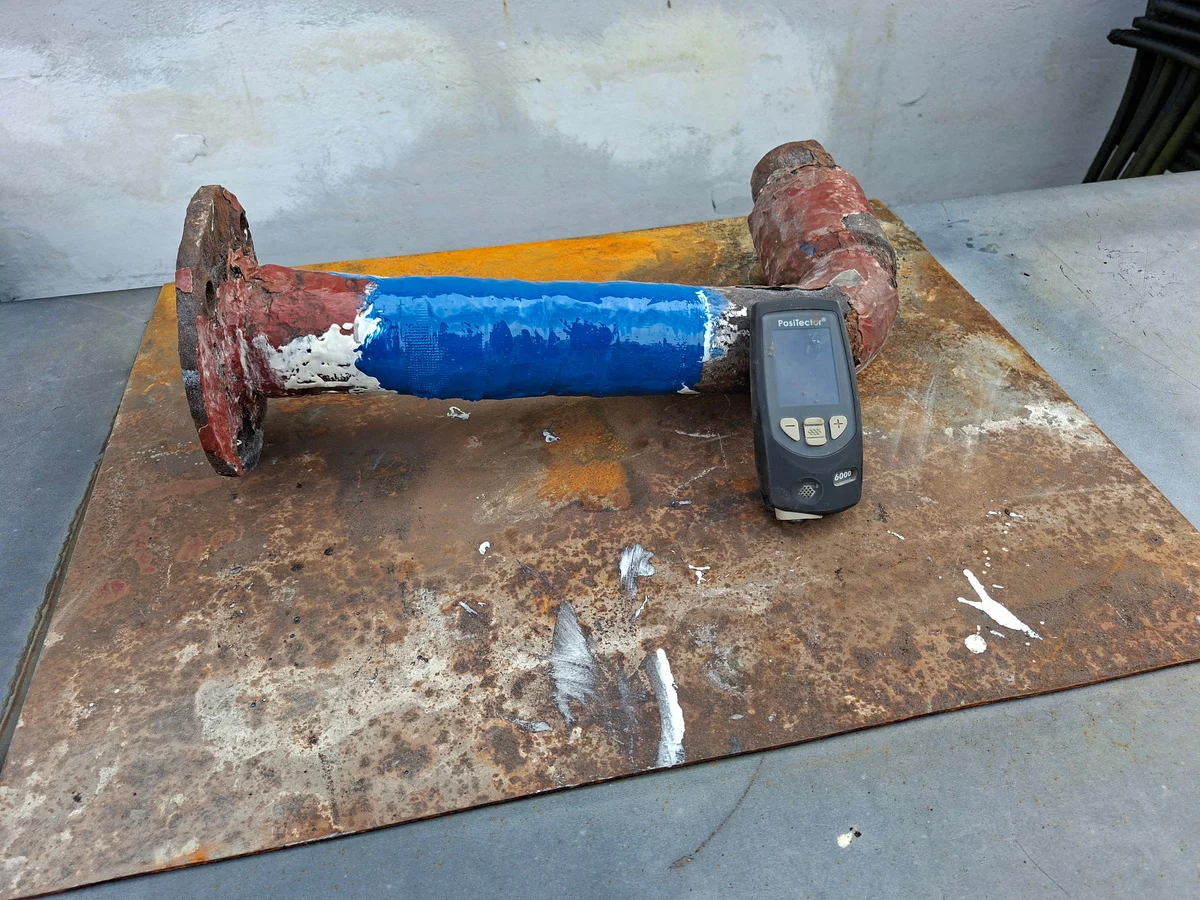 AfterSteel and GRE pipes
Pipe repair with epoxy and wrap
Blasted, then rebuilt with four coats of Super Guard and three layers of Super Wrap.
See the repair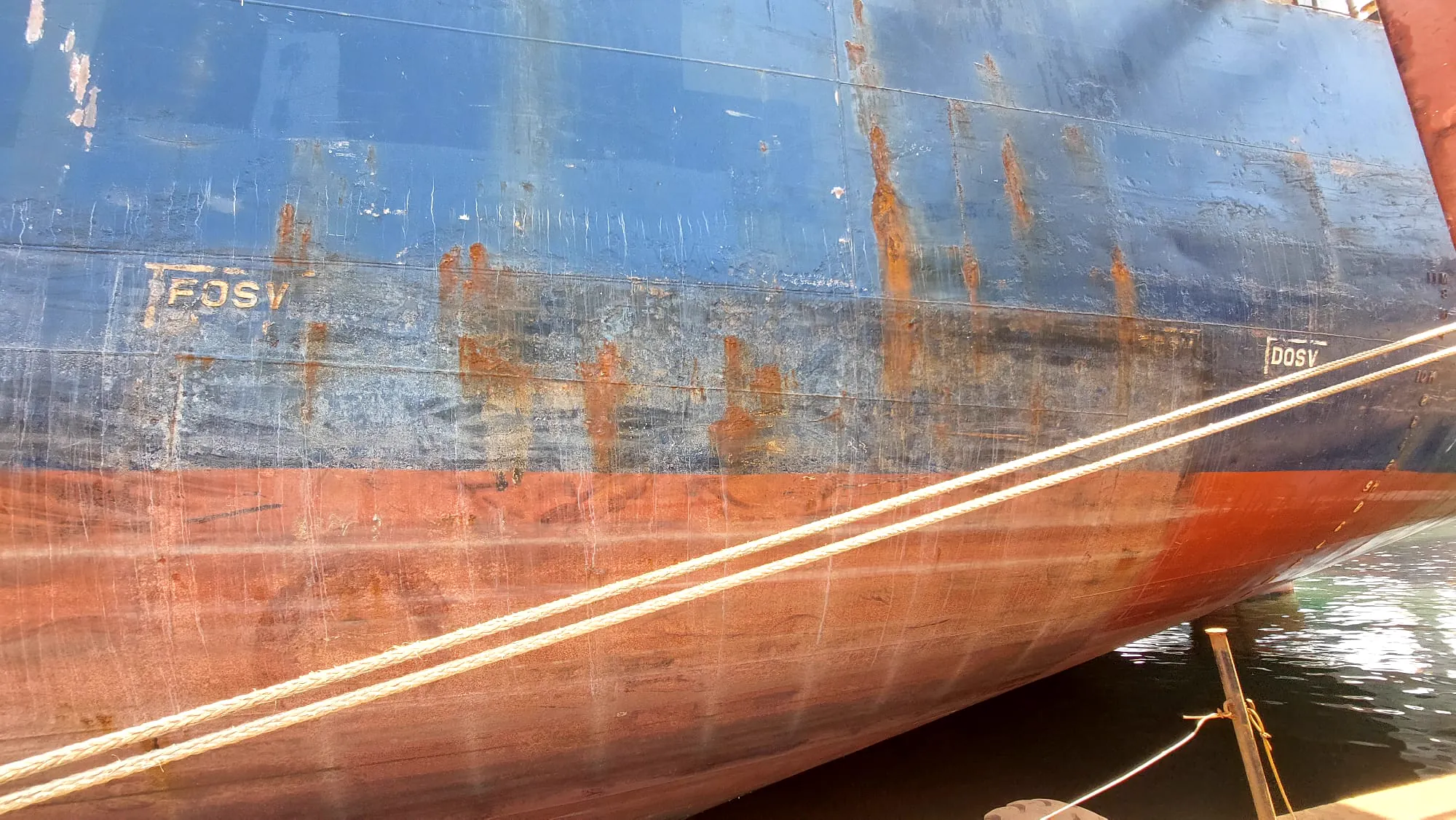 Before
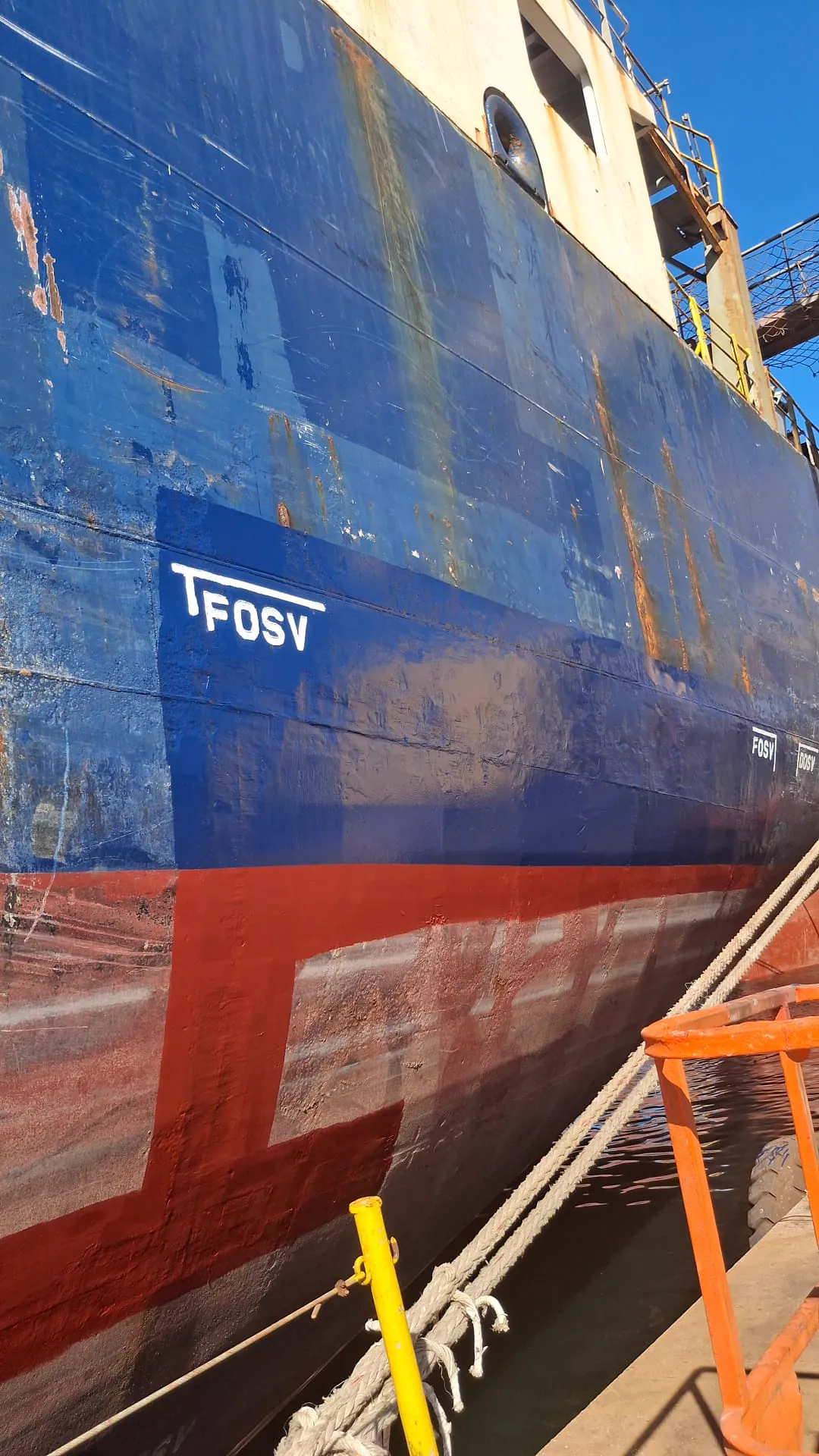 AfterShipyard
Hull repair: heavy pitting
Deep pitting rebuilt with Super Metal Filler and accepted by the attending ABS surveyor.
See the repairDescribe the damage.
We'll specify the repair.
Tell us the dimensions, whether the surface is wet or dry, and the operating temperature and pressure. We normally reply within one business day.
Request a quote or repair advice
No obligation. If another approach suits the damage better, we will say so.