Scrubber overboard pipe repair, done by your own crew.
Acidic wash water eats through overboard pipes and spool pieces in months. Rebuild the pitting and line the pipe from the inside with cold-cure epoxy: one component, straight from the cartridge, no hot work.
Prefer to talk? Call (+45) 6916 2400 or email tech@sepcotech.com
Ordering through ShipServ? Find us under TNID 317548
- DN 200 – DN 700 steel overboard pipes and spool pieces
- No hot work, no welding, nothing to measure or mix
- Aqua Guard bonds and cures on a damp surface
- ABS Product Design Assessment certificate on all products
Updated 21 November 2026 · SepcoTech A/S, Roskilde, Denmark
- 1
 Bio CleanerCleans off scale, soot and salt · #10254
- 2
 Super Metal Filler CompoundRebuilds the pits to the original wall · #10240 PDF
- 3
 Super Guard Coating WhiteCoat 1, 200 µm, with stripe coat · #10233 PDF
- 4Super Guard Coating BlueCoat 2, 200 µm, shows any missed area · #10234 PDF
 Pipe stays damp? Use Aqua Guard Grey (#10238) and Black (#10302) for coats 3 and 4.
- Pipe sizes
- DN 200 – DN 700
- Surface prep
- Sa 2½, min. 40 µm (guide)
- Lining
- 2 coats × 200 µm DFT
- Damp surface
- Yes, with Aqua Guard
- Hot work
- None
- Class documentation
- ABS Product Design Assessment (PDF)
Why scrubber overboard pipes fail.
Open-loop scrubbers send warm, acidic wash water over the side, through pipework that was never specified for it.
Most scrubber overboard pipes and spool pieces are plain mild steel. Class societies and P&I clubs have reported overboard pipes leaking within months of the scrubber going into service, and corrosion in the discharge line is behind a large share of scrubber-related claims. DNV and Gard have both warned about it.
The damage concentrates where the wash water runs: the bottom of the pipe next to the overboard valve flange and the spool piece, the short pipe between the valve and the hull. The same water attacks the scrubber outlet and the hull plating around it, and it can crack or erode the GRE wash-water pipes inside the ship.
Caught early, the pipe can be saved. While the wall is still above the minimum thickness, rebuilding the pits and lining the pipe stops the attack for a fraction of the cost and downtime of replacing the spool piece.
Once the wall is holed or below minimum, a steel repair or a new spool piece comes first. Line the new pipe before it goes into service, so it does not corrode the same way.
Thickness report
Wall loss at the bottom of the spool piece or near the valve flange in the annual thickness measurement.
Failing lining
Blistered, cracked or missing coating with rust and scale underneath.
Pitting
Pits a few mm deep, clustered on the bottom of the pipe where the wash water runs.
Outlet and hull plate
Corrosion around the outlet on the hull plating, outside the overboard valve.
The whole scrubber discharge line, from one supplier.
Each area has its own free step-by-step procedure, written for the crew doing the work. All of them, with the products, are on the scrubber solutions page.
Overboard pipe & spool piece
Rebuild pitting and line the inside of the overboard pipe and spool piece.
See the procedureGRE scrubber pipes
Repair cracks and leaks in GRE or steel wash-water pipes without cutting out the section.
GRE pipe repairOverboard hull protection
Coat the hull plate around the outlet, where the discharge drives faster corrosion.
Procedure PDFWider scrubber scopes
Bespoke repair and protection schemes for the rest of the scrubber installation.
2-page overviewHow to repair a scrubber overboard pipe with epoxy.
The procedure from the SepcoTech instruction handbook for scrubber overboard outlets. The calculator gives the same steps with the quantities for your pipe.
Isolate and open up
Close the overboard valve (or dock the ship), drain the pipe and ventilate it. Check the wall thickness, especially at the bottom of the pipe next to the valve flange.
Clean
Remove scale, soot and salt deposits with Bio Cleaner, rinse with fresh water and let the surface dry.
Grit blast to Sa 2½
Minimum 40 µm profile over the whole inside surface and into every pit. The Rotating Blaster Duo works inside the pipe. Surface preparation guide
Rebuild the pits
Fill corroded and pitted areas with Super Metal Filler Compound, level with the surrounding wall. Let it semi-cure.
Stripe coat and coat 1
Stripe coat welds, edges and flange transitions, then apply Super Guard Coating White (dry pipe) or Aqua Guard Grey (damp pipe) at 200 µm DFT over the whole inside. Let it semi-cure.
Stripe coat and coat 2
Repeat with Super Guard Coating Blue or Aqua Guard Black at 200 µm. The contrasting colour shows straight away if any area has been missed.
Cure and inspect
Let the coating cure fully before the scrubber runs again. Inspect it, paying particular attention to the joint at the overboard valve flange.
Terms used on this page
- DN
- Nominal pipe size in millimetres. DN 300 is a 12-inch pipe.
- Spool piece
- The short pipe between the overboard valve and the hull, where corrosion is usually worst.
- Sa 2½
- Blast-cleaning grade (ISO 8501-1): rust, mill scale and old coating removed, only slight stains left.
- Surface profile
- The roughness left by blasting that the epoxy grips. Minimum 40 µm. See the Surface preparation guide.
- µm
- Micrometre, a thousandth of a millimetre. 200 µm is 0.2 mm.
- DFT
- Dry film thickness: how thick a coat is once it has cured.
- Stripe coat
- An extra brushed coat on welds, edges and flange transitions, where a coat tends to be thinnest.
- Semi-cure
- The coat has set enough to take the next one, but is not yet fully hard.
Coat only sound steel. A holed pipe or a wall below the minimum thickness needs a steel repair or a new spool piece first. Class checks the spool piece wall thickness at every annual survey, so keep the thickness report with the repair record.
Full procedure with photos
The scrubber overboard outlet procedure as a PDF, ready to print for the job or forward to the technical superintendent.
Repair, replace, or call in divers?
Replacing the spool piece is the right fix for a holed pipe. While the steel is still sound, rebuilding and lining it costs far less, and the crew can do it.
| Epoxy rebuild & lining (SepcoTech) | Pipe replacement or pipe-in-pipe | Diver or contractor repair | |
|---|---|---|---|
| Who does it | Ship's crew or yard, following the procedure | Yard or specialist contractor | Specialist diving company |
| Hot work | None | Usually cutting and welding | Depends on the method |
| When | Planned stop with the pipe drained, or dry dock | Dry dock or a long port stay | In port, booked in advance |
| Suits | Light corrosion to heavy pitting, wall above minimum | Holed pipes, wall below minimum | Leaks that cannot wait for a stop |
| Cost | Material, own labour | High | High |
Why crews choose SepcoTech for scrubber pipes.
Nothing to mix
One component, straight from the cartridge. No weighing or hand mixing of two-part epoxy, a common cause of soft or failed coatings.
Works when the pipe won't dry
Aqua Guard bonds and cures on a damp surface, so seeping wash water does not stop the job.
Exact quantities
The calculator works out cartridges and filler sets from pipe size, length, flange joints and pitting.
Procedure in the crew's hands
A free, published step-by-step procedure for every scrubber area, and a 96-page instruction handbook.
Class documentation
ABS Product Design Assessment certificate on all products, with safety data sheets ready to download.
View the ABS certificate (PDF)Steel and GRE
One product range for steel overboard pipes and the GRE wash-water pipes inside the ship.
What goes into the repair.
RebuildSuper Metal Filler Compound
Rebuilds pitted and corroded areas back to the original wall before lining.
1.0 kg set#10240Product page Brochure PDFAlso used: Bio Cleaner (#10254, biodegradable degreaser), Rotating Blaster Duo (#10267, for blasting inside the pipe) and the SepcoTech Application Toolbox (#10266).
How much epoxy does your pipe need?
Pick the pipe size (DN 200 to DN 700), the length to coat, the flange joints and how pitted it is. You get the area, the cartridges, the filler sets and the steps, as a PDF to send for a quote.
Everything your superintendent will ask for.
The same products and method, already proven at sea.
We have no published scrubber case yet. These repairs used the same SepcoTech products and the same steps you would use on a scrubber overboard pipe.
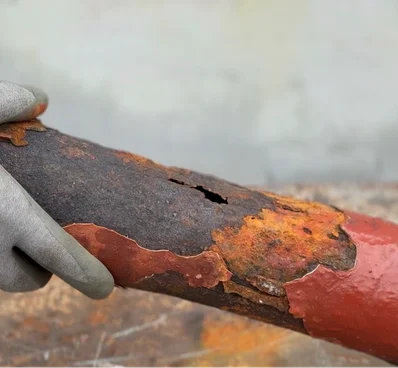 Before
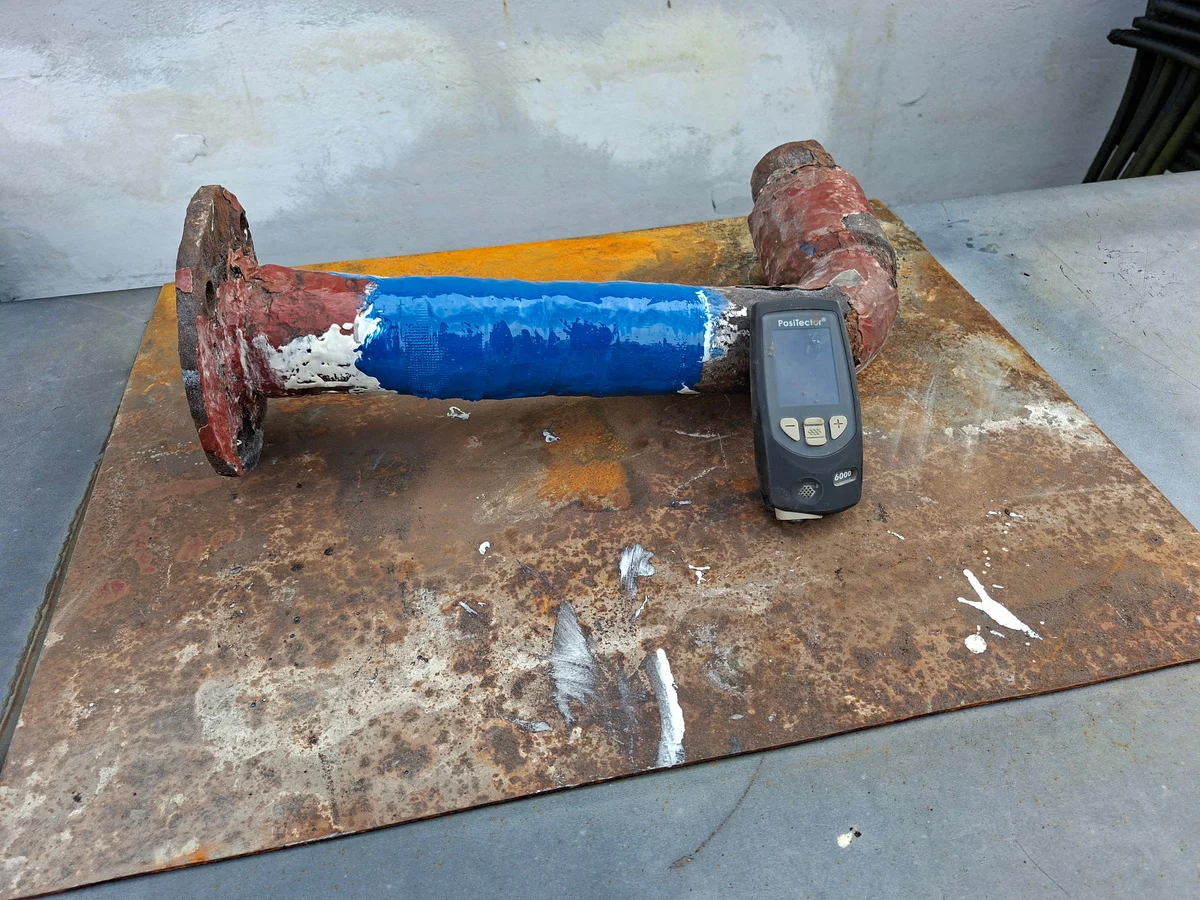 AfterSteel and GRE pipes
Pipe repair with epoxy and wrap
Blasted, then rebuilt with four coats of Super Guard and three layers of Super Wrap.
See the repair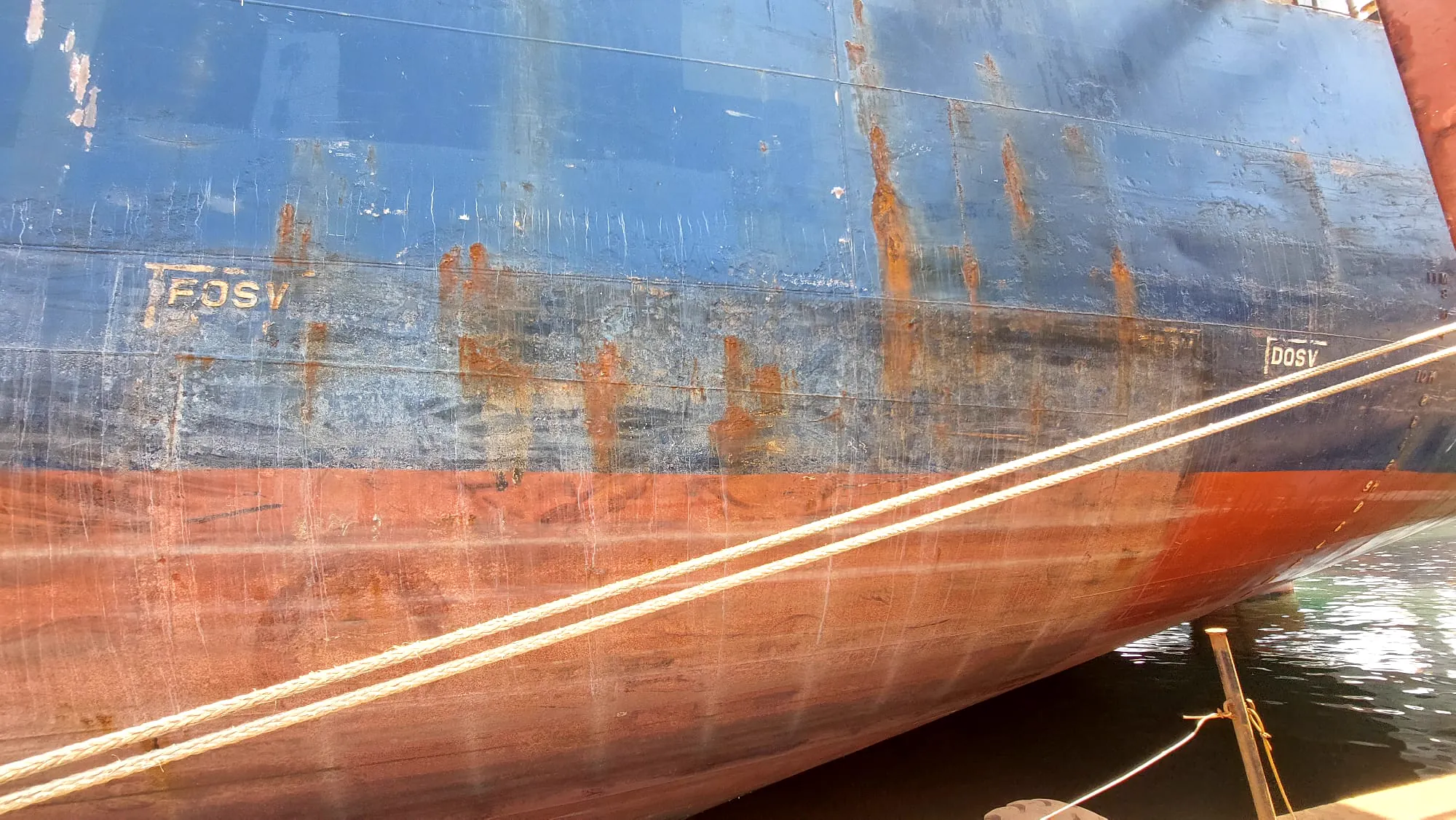 Before
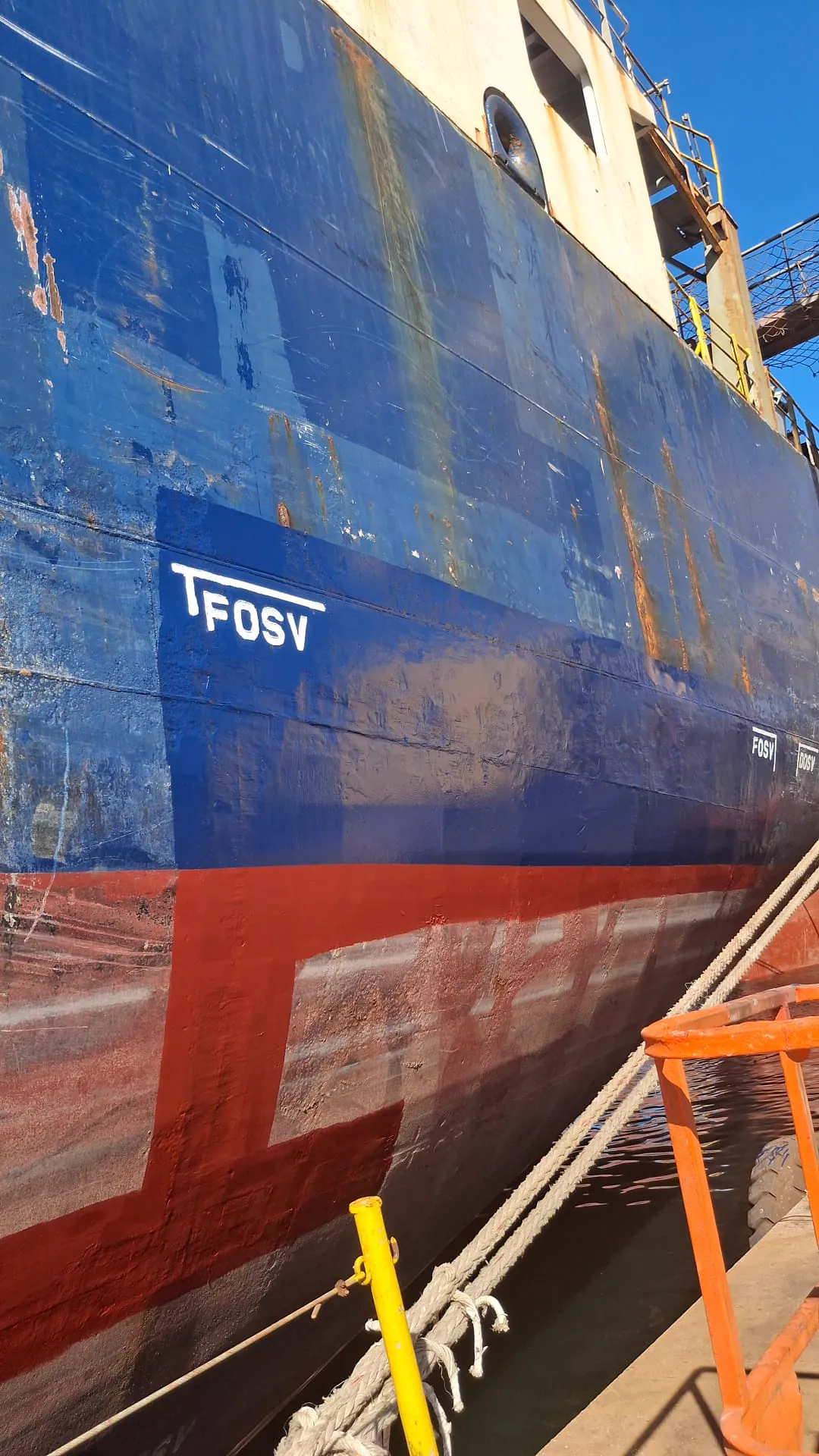 AfterShipyard
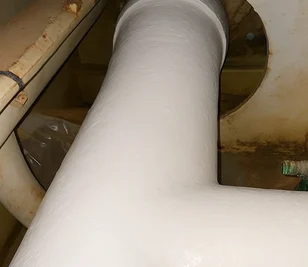
Hull repair: heavy pitting
Deep pitting rebuilt with Super Metal Filler and accepted by the attending ABS surveyor.
See the repair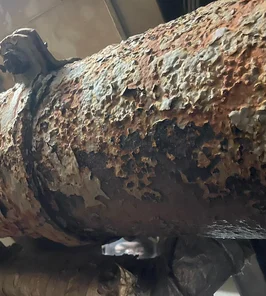 Before
 AfterContainer vessel
Leak repair: cargo pipes
Leaking, corroded pipes inside the ballast tanks, sealed in place by the crew.
See the repairScrubber overboard pipe repair: your questions.
Why do scrubber overboard pipes corrode so fast?
Open-loop scrubbers discharge warm, acidic wash water. Mild steel overboard pipes and spool pieces lose wall thickness quickly, especially at the bottom of the pipe next to the overboard valve flange. Without an internal lining, pitting can start within months of the scrubber going into service.
Can a scrubber overboard pipe be repaired with epoxy?
Yes, as long as the steel is still sound. Pits are rebuilt with Super Metal Filler Compound and the whole inside is lined with two coats of Super Guard (dry surface) or Aqua Guard (damp surface) at 200 µm each. A holed pipe or a wall below the minimum thickness needs a steel repair or a new spool piece first.
What is the spool piece, and why does it fail first?
The spool piece is the short pipe between the scrubber overboard valve and the hull, usually 0.5 to 2 m long. Acidic wash water corrodes it fastest, so class checks its wall thickness every year.
Does the repair need hot work or welding?
No. SepcoTech epoxies are cold-cure and one-component, straight from the cartridge: no hot work, no welding, nothing to measure, mix or pre-heat.
Can the lining go on a damp surface?
Yes. If sea water or wash water keeps seeping in after draining, use Aqua Guard, which bonds and cures on a damp surface. Super Guard is recommended when the pipe can be fully dried, for example in dry dock.
How much epoxy does a scrubber overboard pipe need?
It depends on the pipe size, the length to coat, the number of flange joints and how pitted the pipe is. The free SepcoTech epoxy calculator works it out for DN 200 to DN 700 pipes and lists the cartridges and filler sets, ready to send for a quote.
What does class require for scrubber overboard pipes?
Several classification societies require the wall thickness of the scrubber overboard pipe and spool piece to be verified at the annual survey. Follow your class society's requirements and keep the thickness report with the repair record.
Do SepcoTech epoxies have class documentation?
Yes. SepcoTech holds an ABS Product Design Assessment certificate on all products. The certificate, safety data sheets and the 96-page instruction handbook are free to download.
Can the GRE scrubber pipes inside the ship be repaired too?
Yes. Super Guard bonds to glass-reinforced epoxy, so cracked or leaking GRE wash-water pipes are repaired and reinforced with Super Guard and Super Wrap instead of cutting out the section. See GRE scrubber pipe repair.
What about the hull plating around the scrubber outlet?
The plate around the overboard outlet corrodes faster because of the discharge. SepcoTech has a separate overboard hull protection procedure for coating that area.
Further reading: DNV, SOx scrubber overboard pipe failure · Gard, scrubber risks: lessons from six years of claims · Steamship Mutual, overboard connection corrosion alert
GRE wash-water pipes leaking too?
Cracks and leaks in GRE scrubber pipes are repaired and reinforced in place with Super Guard and Super Wrap.
Describe the damage.
We'll specify the repair.
Tell us the dimensions, whether the surface is wet or dry, and the operating temperature and pressure. We normally reply within one business day.
Request a quote or repair advice
No obligation. If another approach suits the damage better, we will say so.